September 25, 2026
Developmental Milestones
Wellness
Join Us for an Open House October 7, 9-11am; October 8, 4:30-6pm; October 10, 10am-1pm Contact Us for Details


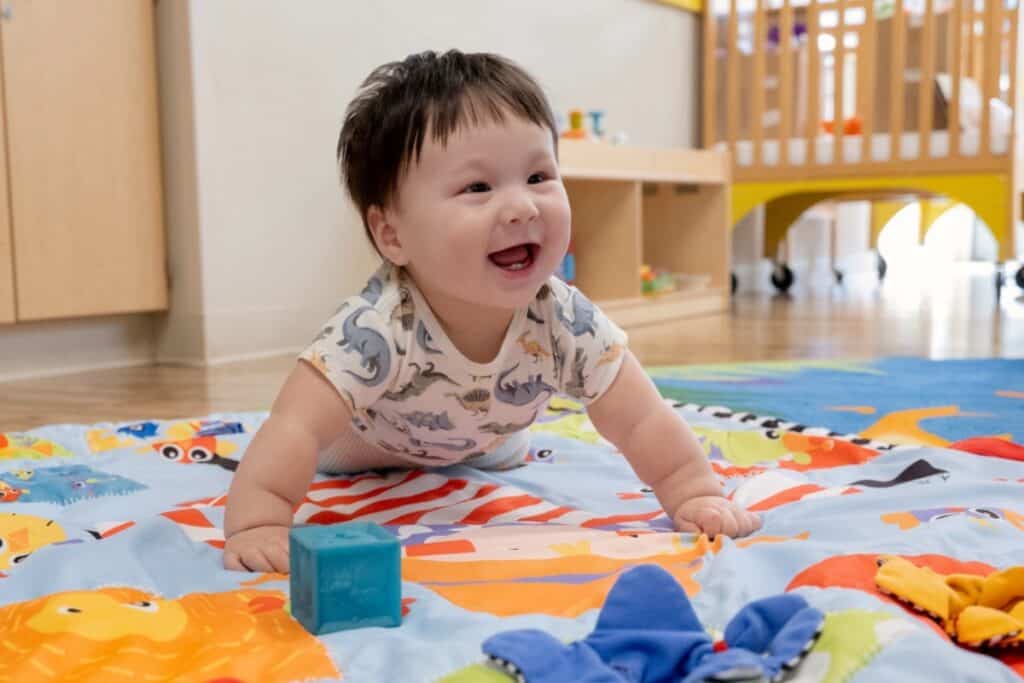
Tummy time is an essential activity for your baby’s development. It helps strengthen muscles, support motor skills, encourage sensory exploration, and even aid digestion. But as a parent, you may wonder: When should tummy time begin? How often should my baby do it? And what milestones should I expect?
We’ve put together a parent-friendly guide to help get you started.
Tummy time simply means placing your baby on their stomach while they are awake and supervised. This position encourages them to lift their head, push up on their arms, roll over, and eventually crawl. It also gives babies a new perspective on the world and strengthens the muscles they’ll need for sitting, standing, and walking.
Safety Reminder: Always place your baby on a firm surface, like a play mat or blanket on the floor. Never leave your baby unattended.
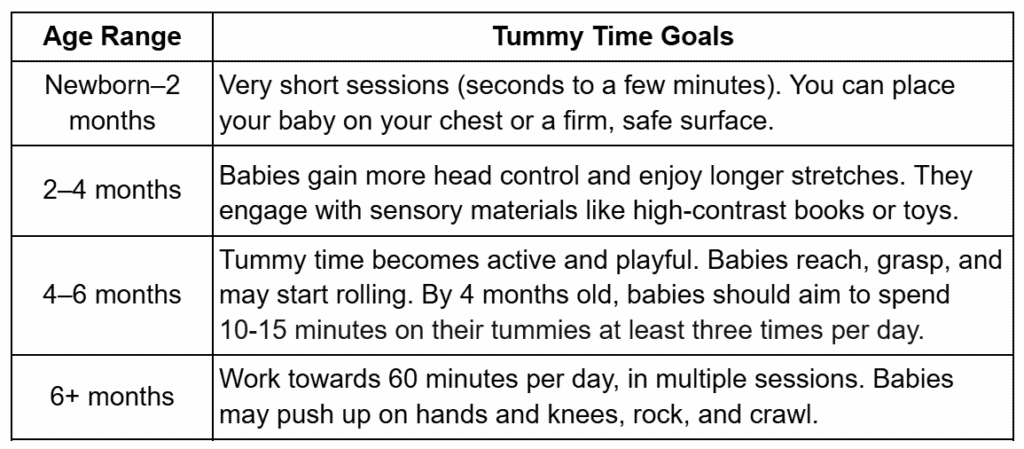
The American Academy of Pediatrics recommends daily supervised tummy time for newborns starting from the first day home to build neck, shoulder, and back strength, and to prevent flat spots on the head. Begin with 2–3 short sessions daily (about 3–5 minutes each), gradually increasing to 15–30 minutes total by 7 weeks. You can begin by placing your baby on your chest, lying stomach-to-stomach, or on a firm mat. The goal is to gradually build the duration and frequency of tummy time as your baby grows.
Here’s a breakdown of some tummy time milestones by age. Remember, every baby develops at their own pace!
Q: What if my baby hates tummy time?
Many babies don’t like tummy time at first. Try shorter sessions, engage with toys, or lie down with them. Gradually, most babies enjoy it as they gain strength.
Q: Is tummy time safe?
Yes, as long as your baby is awake, supervised, and on a firm surface.
Q: When will tummy time help my baby roll over or crawl?
Tummy time builds the muscles needed for rolling and crawling, usually starting between 4–6 months for rolling and 6–10 months for crawling. Every baby develops at their own pace.
Q: What should I do if my baby falls asleep during tummy time?
If your baby falls asleep, gently turn them onto their back and place them in their crib for safe sleep.
Remember: Tummy time is a foundation for your baby’s physical and cognitive growth. Start early, keep sessions short and engaging, and celebrate each milestone along the way. With patience and consistency, your baby will build strength, explore their world, and reach exciting new developmental stages!
In our Infant Program, tummy time is part of our daily routine. With personalized attention and a nurturing environment, we help our littlest learners grow confidently at their own pace. Visit us and see how we support your baby’s development every step of the way!
Contact us to learn more about Carrington Academy.